
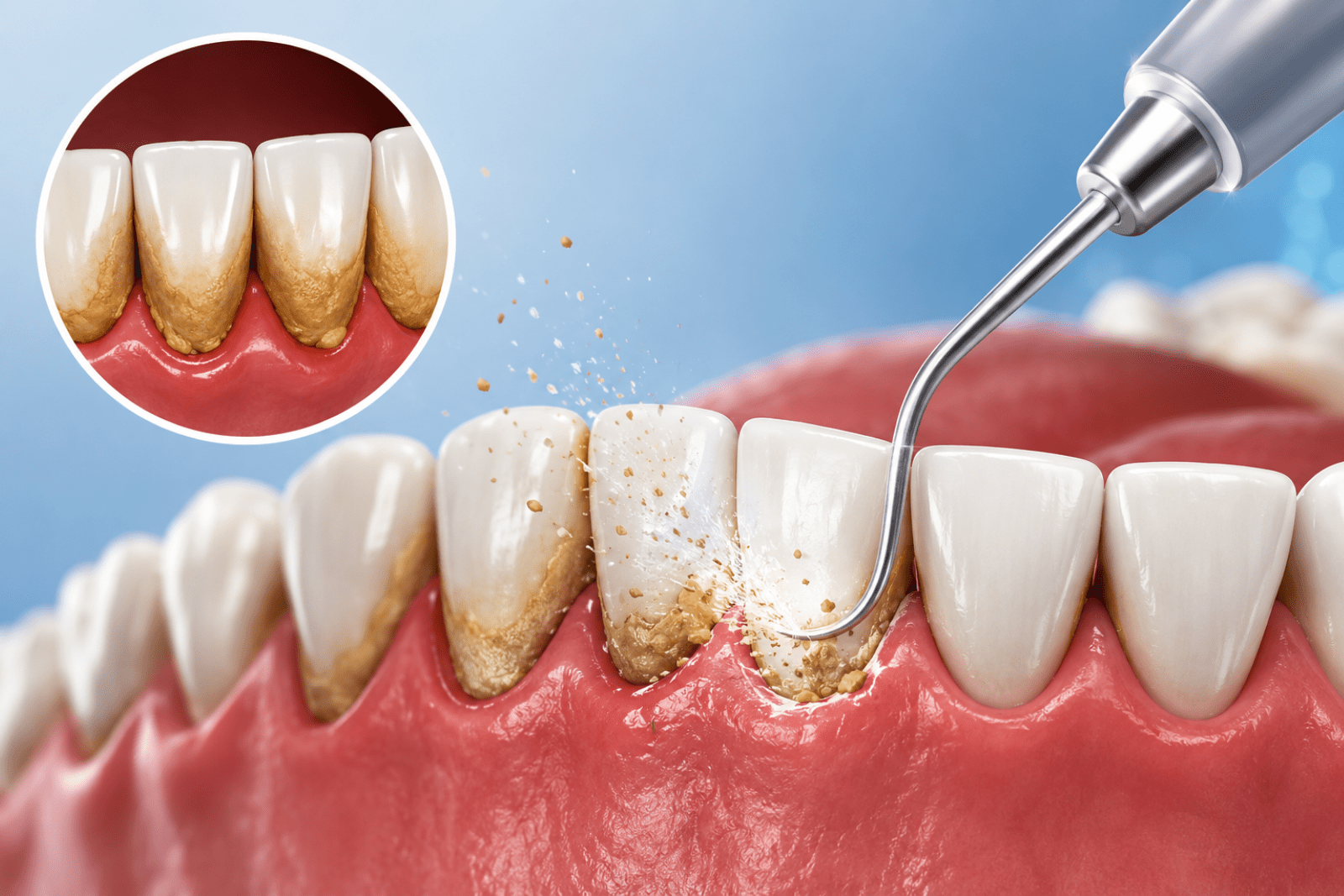
Tartar is a common oral-health concern that can affect the appearance of your smile and contribute to gum problems if left untreated. Understanding tartar on teeth, its causes, professional removal, and preventive care can help us maintain cleaner teeth and healthier gums. Regular dental visits and professional cleaning can remove hardened deposits that routine brushing cannot eliminate.
What is Tartar on Teeth?
Tartar on teeth, also known as dental calculus, is hardened plaque that has accumulated on the tooth surface. Plaque is a soft, sticky film containing bacteria that forms naturally on teeth throughout the day. When plaque is not adequately removed through brushing and interdental cleaning, minerals in saliva can cause it to harden.
Once plaque becomes tartar, it forms a firm deposit that cannot usually be removed effectively with a toothbrush or dental floss. Tartar may develop along the gumline, between teeth, behind the lower front teeth, and around areas that are difficult to clean.
Unlike soft plaque, hardened tartar generally requires professional tartar removal. Attempting to scrape deposits away with household objects or sharp instruments can injure the gums, damage tooth surfaces, or introduce bacteria into sensitive areas.
Tartar on Teeth Causes
Several factors can contribute to the development of dental tartar. Understanding the main tartar on teeth causes us to identify areas where daily oral-care habits can be improved.
1. Poor Oral Hygiene
Inconsistent oral hygiene allows plaque to remain on teeth for longer periods. As plaque accumulates and is exposed to minerals in saliva, it can harden and become calculus.
2. Inadequate Brushing and Flossing
Brushing twice a day is important, but technique and coverage also matter. Missing the gumline, back teeth, or areas between teeth can leave plaque behind. Flossing or using suitable interdental cleaning methods helps reach spaces a toothbrush cannot clean effectively.
3. Smoking and Tobacco Use
Tobacco can contribute to staining and may negatively affect gum health. It can also make deposits more noticeable and is associated with an increased risk of periodontal problems.
4. Dietary Habits
Frequent consumption of sugary or carbohydrate-rich foods and drinks can contribute to plaque formation. Sticky foods may remain on tooth surfaces longer, particularly when oral hygiene is inconsistent.
5. Irregular Dental Check-Ups
Even with good daily care, some areas of the mouth can be difficult to clean completely. Regular dental examinations and professional cleanings allow us to identify and remove deposits before they become a larger concern.
6. Dry Mouth and Other Factors
Reduced saliva flow can affect the natural cleansing of the mouth. Certain medications, dehydration, mouth breathing, and other factors may contribute to dry mouth. Individual oral anatomy can also make some areas more prone to plaque and tartar accumulation.
What Problems Can Dental Tartar Cause?
Dental tartar is more than a cosmetic concern. Its rough surface can provide additional areas where plaque accumulates, making effective cleaning more difficult.
Tartar around the gumline may contribute to gum inflammation, which can cause redness, tenderness, or bleeding during brushing and flossing. Persistent plaque and calculus accumulation may increase the risk of gum disease.
Other possible signs include:
- Bleeding gums
- Gum swelling or tenderness
- Persistent bad breath
- Increased plaque accumulation
- Gum recession in some cases
- Periodontal problems when gum disease progresses
When gum disease becomes more advanced, the tissues supporting the teeth can be affected. For this reason, we recommend professional assessment when tartar is accompanied by persistent bleeding, swelling, discomfort, or changes around the gums.
Interesting Read: Teeth Cleaning Without Fear: What to Expect at Your Appointment
How is Tartar Removal Done?
Professional teeth tartar removal is performed using dental instruments and techniques designed to remove hardened deposits safely. The procedure commonly involves scaling and polishing.
Scaling
Scaling involves removing plaque and calculus from tooth surfaces. Depending on the amount and location of buildup, dental professionals may use specialized ultrasonic or hand instruments.
Scaling can address deposits above the gumline and, when clinically necessary, deposits around or below the gumline as part of periodontal care.
Polishing
After scaling, polishing may be performed to smooth the tooth surfaces and remove certain superficial stains and residual deposits. This can leave teeth feeling noticeably cleaner and smoother.
What Can We Expect During Professional Cleaning?
A routine cleaning typically begins with an assessment of the teeth and gums. We then identify areas with plaque, calculus, staining, or other concerns before proceeding with appropriate cleaning.
Some patients experience mild sensitivity during scaling, particularly when there is significant buildup or gum inflammation. The experience can vary depending on oral health, sensitivity, and the extent of tartar.
We do not recommend trying to remove hardened calculus at home with sharp objects. Professional instruments and techniques are designed to minimize unnecessary injury while effectively cleaning the teeth and gumline.
How Teeth Cleaning Can Help Remove Tartar
Professional cleaning is an important part of maintaining oral hygiene because it addresses deposits that daily brushing cannot fully remove.
Regular teeth cleaning can:
- Remove hardened tartar deposits
- Reduce plaque accumulation
- Support healthier gums
- Help control sources of persistent bad breath
- Remove some surface staining
- Make daily brushing and flossing easier
- Support long-term preventive dental care
Professional cleaning does not replace daily brushing and interdental cleaning. Instead, it complements our home-care routine by addressing areas where plaque and calculus have accumulated.
When Should We Consider Professional Teeth Cleaning?
We should consider a professional cleaning when tartar or other signs of oral-health concerns become noticeable. Common reasons include:
- Visible yellow, brown, or hardened deposits
- Bleeding while brushing or flossing
- Swollen or irritated gums
- Persistent bad breath
- Noticeable surface staining
- Teeth that feel rough near the gumline
- A long interval since the previous dental cleaning
The appropriate cleaning frequency varies from person to person. Some individuals may benefit from routine preventive cleanings, while others with gum disease or a higher risk of calculus buildup may require more frequent professional care.
Trusted Teeth Cleaning Services in Gota, Ahmedabad
For patients searching for Teeth Cleaning or professional Teeth Cleaning Services in Gota, choosing a dental practice that combines cleaning with a proper oral examination can be beneficial.
At Akash Dental Care, we focus on professional oral evaluation and individualized preventive care. During a dental visit, we can assess the condition of the teeth and gums, identify tartar buildup, evaluate areas that may be difficult to clean, and recommend an appropriate cleaning approach.
For patients looking for Teeth Cleaning in Ahmedabad, professional evaluation can also help identify underlying concerns such as gum inflammation, persistent plaque accumulation, tooth sensitivity, or staining.
Our approach is centered on understanding each patient’s oral-health needs rather than treating every cleaning appointment in exactly the same way. Following professional cleaning, we can also provide practical recommendations for brushing, flossing, interdental cleaning, and maintaining healthier daily habits.
Interesting Read: Regular Dental Cleaning vs Deep Cleaning: What is the Difference?
Can Teeth Cleaning Also Improve the Appearance of Your Smile?
Professional cleaning can make teeth appear cleaner, especially when surface plaque, calculus, and certain external stains have accumulated. However, teeth cleaning and professional teeth whitening are different treatments.
Cleaning primarily removes plaque, tartar, and some external staining from the tooth surface. It does not fundamentally change the natural internal colour of teeth.
Professional teeth whitening, on the other hand, is specifically designed to lighten the colour of natural teeth. If staining remains after cleaning, we can assess whether Professional teeth whitening may be appropriate.
A dental evaluation is useful before whitening because not every type of discoloration responds in the same way. Existing dental restorations, cavities, gum concerns, and tooth sensitivity may also influence treatment recommendations.
How to Prevent Tartar From Building Up
Although professional cleaning is effective for removing hardened deposits, prevention remains an important part of oral care.
We recommend maintaining a consistent routine that includes:
1. Brush Twice Daily
Brush for approximately two minutes twice a day using a fluoride toothpaste and a suitable toothbrush. Pay particular attention to the gumline and difficult-to-reach areas.
2. Clean Between the Teeth
Floss or use an appropriate interdental cleaning method to remove plaque from spaces a toothbrush cannot reach.
3. Limit Frequent Sugary Foods and Drinks
Reducing frequent exposure to sugary foods and beverages can help manage plaque-related oral-health risks.
4. Avoid Tobacco
Avoiding tobacco supports better overall oral health and can reduce tobacco-related staining and other oral-health risks.
5. Maintain Regular Dental Visits
Routine dental examinations and professional cleanings allow us to identify tartar and other concerns before they become more difficult to manage.
Why Choose Akash Dental Care?
At Akash Dental Care, we take a patient-focused approach to preventive and general dental care. We recognize that every patient’s oral-health needs are different, so our recommendations are based on the condition of the teeth, gums, existing buildup, and individual risk factors.
Our professional cleaning approach is intended to help patients maintain cleaner teeth and healthier gums while understanding how to improve their daily oral-care routine.
For patients seeking a dentist in Gota, Ahmedabad, professional teeth cleaning can be an important step toward maintaining long-term oral health. A comprehensive evaluation can also help identify concerns that may not be obvious during everyday brushing.
Keep Your Teeth Cleaner With Professional Tartar Removal
Tartar can develop gradually, often without causing immediate discomfort. However, once plaque hardens into calculus, ordinary brushing cannot effectively remove it. Professional tartar removal and routine dental examinations can help maintain cleaner tooth surfaces, healthier gums, and better long-term oral hygiene.
If you notice visible deposits, bleeding gums, persistent bad breath, swelling, or staining, professional assessment can help determine the appropriate next step. For patients looking for Teeth Cleaning in Gota, Ahmedabad, Akash Dental Care provides professional dental evaluation and cleaning focused on individual oral-health needs.
Schedule a dental evaluation with Akash Dental Care to address tartar buildup and take a proactive approach to maintaining a healthier, cleaner smile.
Frequently Asked Questions About Tartar on Teeth
1. What causes tartar on teeth?
Tartar develops when plaque remains on teeth and hardens due to minerals in saliva. Inadequate brushing, insufficient interdental cleaning, tobacco use, dry mouth, diet, and irregular dental visits can contribute to buildup.
2. Can tartar be removed at home?
Hardened tartar generally cannot be safely removed with regular brushing or household tools. Professional cleaning is recommended because dental professionals have the appropriate instruments and techniques for removing calculus without unnecessarily damaging teeth or gums.
3. Is teeth cleaning painful?
Professional cleaning is usually well tolerated, although some people may experience mild sensitivity during scaling. Sensitivity can be more noticeable when there is significant tartar buildup, gum inflammation, or exposed tooth surfaces.
4. How often should we get professional teeth cleaning?
The appropriate frequency depends on individual oral-health needs. Many people benefit from routine professional cleanings, while patients with gum disease, heavy tartar buildup, or other risk factors may require a personalized schedule recommended by their dental professional.
5. Does teeth cleaning remove yellow stains?
Professional cleaning can remove some external stains caused by plaque, tartar, tobacco, food, or beverages. However, stains related to the natural internal colour of teeth may require a different approach, such as professional whitening.
6. What is the difference between teeth cleaning and teeth whitening?
Teeth cleaning removes plaque, tartar, calculus, and some surface stains. Teeth whitening is a cosmetic procedure designed to lighten the colour of natural teeth. Cleaning and whitening therefore address different aspects of smile appearance.
7. Can tartar cause gum disease?
Tartar can contribute to an environment where plaque accumulates around the gums. Persistent plaque and calculus are associated with gum inflammation and periodontal disease. Professional evaluation and consistent home care can help manage these risks.