
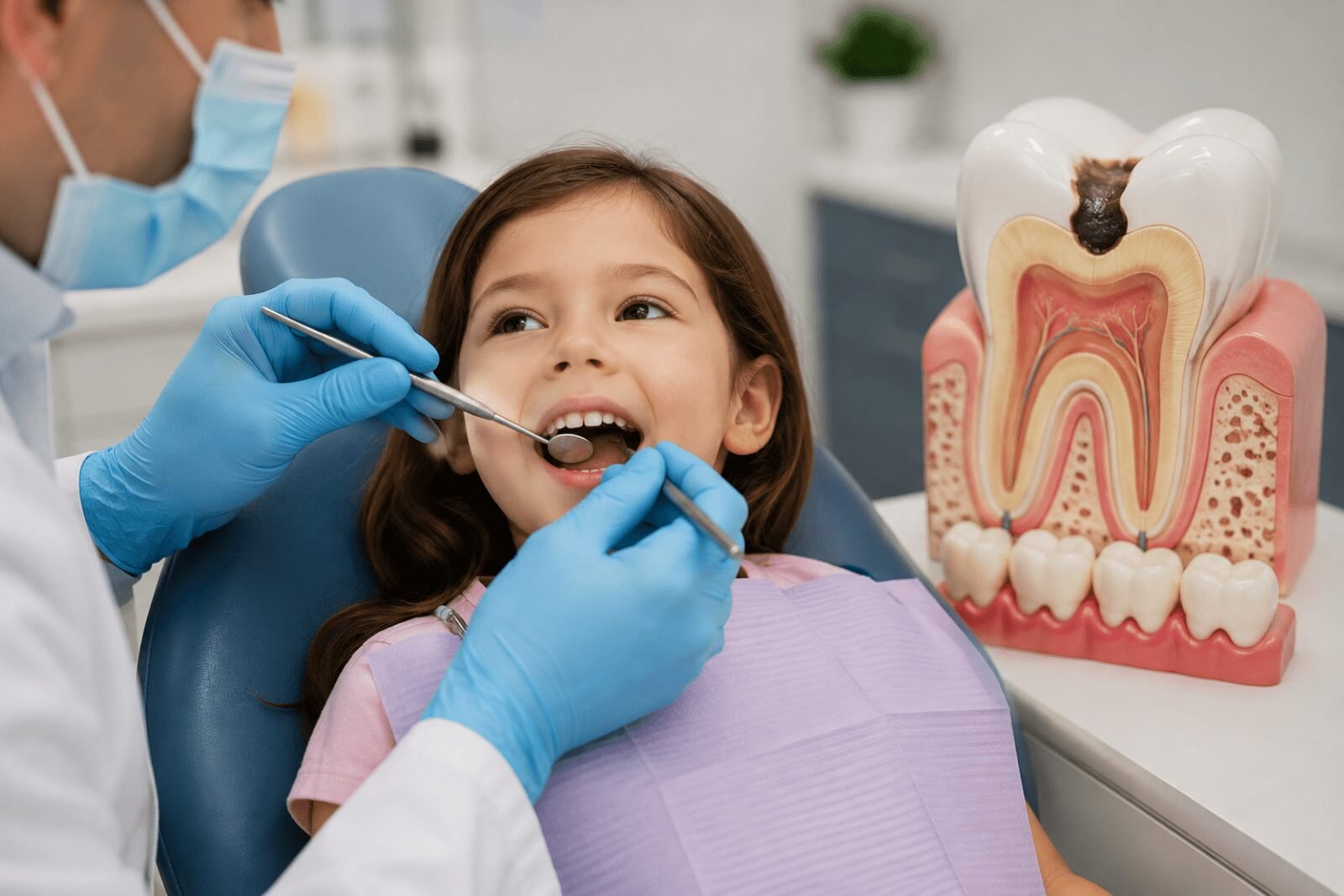
As a parent, it can seem confusing when a dentist recommends filling a cavity in a baby tooth. After all, baby teeth are temporary, so you may naturally wonder, “Why treat a tooth that is going to fall out anyway?”
Leaving a cavity untreated simply because the tooth will eventually fall out can sometimes allow a small dental problem to become a much bigger one. Decay can cause pain, infection, difficulty eating, and other complications. In some situations, severe decay may even affect the normal development or eruption of the permanent tooth underneath.
At Akash Dental Care, children receive preventive and restorative dental care designed around their age, comfort, and individual needs. The clinic provides pediatric check-ups, cavity fillings, fluoride treatments, sealants, orthodontic screening, and guidance for parents.
Baby Teeth Are Temporary, But They Are Still Important
Baby teeth, also called primary teeth, eventually make way for permanent adult teeth. However, they are not simply “placeholder teeth” that can be ignored until they fall out.
Children use their baby teeth every day. They need them to bite and chew food, pronounce certain sounds, and communicate properly. Healthy teeth can also make eating more comfortable and support good nutrition.
Another important role of baby teeth is maintaining space for permanent teeth. When a baby tooth is lost too early because of severe decay or infection, neighbouring teeth can sometimes shift into the space. This may make it more difficult for the permanent tooth to erupt correctly.
This is why dentists look at the bigger picture when deciding whether a cavity needs treatment. The question is not only, “Will this tooth eventually fall out?” It is also, “How long does this tooth need to remain healthy, and what could happen if we leave the decay untreated?”
What Happens If a Cavity in a Baby Tooth Is Not Treated?
A cavity usually does not repair itself once significant tooth structure has been damaged. Without appropriate treatment, decay can continue spreading through the tooth.
At first, a child may not complain about anything. This is one reason regular dental examinations are so valuable. Children may have cavities without obvious pain or may simply become accustomed to mild discomfort.
As decay progresses, several problems can develop.
1. Toothache and Sensitivity
A cavity can eventually become painful, especially when a child eats something sweet, cold, or hot. Persistent tooth pain can make normal activities uncomfortable.
A child may also avoid chewing on one side of the mouth or refuse certain foods.
2. Difficulty Eating
Children need comfortable teeth to chew properly. A painful cavity may cause a child to avoid harder foods or chew differently.
For growing children, maintaining comfortable eating habits is especially important.
3. Dental Infection
If decay reaches deeper parts of the tooth, bacteria can cause inflammation or infection. At this stage, treatment may become more complicated than a simple filling.
In some cases, a dentist may need to consider additional treatment to control the infection and preserve the tooth.
4. Problems With the Developing Permanent Tooth
Permanent teeth develop underneath or near baby teeth. A serious infection involving a primary tooth can sometimes affect the developing permanent tooth.
This does not mean every cavity will cause a problem for the adult tooth. However, it is one reason dentists do not recommend ignoring significant decay.
Why Do Dentists Recommend Fillings for Baby Teeth?
A filling removes the decayed portion of the tooth and restores the damaged area. The goal is to stop the cavity from progressing and keep the tooth functional for as long as it is needed.
Akash Dental Care offers cavity fillings for children as part of its pediatric dental services. The clinic also offers different dental filling materials, with glass ionomer listed as an option that can be particularly useful for children and temporary restorations.
The decision to place a filling depends on several factors, including the size of the cavity, the child’s age, the condition of the tooth, and how long the tooth is expected to remain in the mouth.
A dentist does not simply look at whether the tooth is temporary. They consider its current function and how its condition could affect the child’s oral health.
A Filling Can Help Keep the Tooth Functional
One major reason to treat a baby tooth is to allow the child to continue using it normally.
A healthy tooth contributes to comfortable chewing and helps maintain normal function. A properly restored tooth can remain useful until it naturally becomes loose and is replaced by the permanent tooth.
Think of it this way: if a child has a baby tooth that needs to stay for another year or two, allowing a cavity to grow during that period could create unnecessary pain and complications. Treating the cavity can help the tooth remain healthy during the time it is still needed.
Baby Teeth Help Maintain Space for Adult Teeth
The timing of baby tooth loss is important.
Children normally lose their primary teeth gradually as their permanent teeth develop and prepare to erupt. Each baby tooth has a role in maintaining the appropriate space for the permanent tooth that will replace it.
If a severely damaged baby tooth has to be removed much earlier than expected, the surrounding teeth may move into the space. Depending on the situation, this can contribute to crowding or eruption problems.
Not every early tooth loss causes orthodontic problems, but dentists consider this possibility when planning treatment.
That is why preserving a baby tooth can sometimes be preferable to removing it.
When Might a Dentist Recommend Removing a Baby Tooth Instead?
A filling is not always the right solution.
If a tooth has extensive decay, cannot be restored properly, or has a significant infection, the dentist may recommend another treatment. The decision depends on the condition of the tooth and the child’s individual circumstances.
The dentist may consider:
- How much healthy tooth structure remains
- Whether the tooth can be restored
- Whether there is an infection
- The child’s age
- How close the tooth is to its natural shedding time
- The position and development of the permanent tooth
- The child’s overall dental health
This is why parents should not assume that every baby tooth with a cavity needs either a filling or extraction. A professional examination is needed to determine the most appropriate approach.
How Can Parents Recognize a Cavity in a Child?
Sometimes cavities are easy to see, but they can also develop in areas that are difficult for parents to notice.
Possible signs include:
- White, brown, or dark spots on the teeth
- Food frequently getting stuck in one area
- Tooth sensitivity
- Complaints of tooth pain
- Pain while chewing
- Swollen gums near a tooth
- Bad breath that continues despite regular brushing
- Avoiding certain foods
- Waking during the night because of dental discomfort
However, children do not always experience obvious symptoms. A cavity may be detected during a routine dental examination before it becomes painful.
This is one reason regular visits are important even when your child appears to have healthy teeth.
Prevention Is Better Than Waiting for a Cavity
The best cavity is the one that never develops.
Children can be more vulnerable to cavities because of frequent snacking, sugary drinks, inconsistent brushing, and difficulty cleaning every area of the mouth effectively.
Parents can help by making oral hygiene part of the child’s daily routine.
Encourage your child to:
- Brush twice a day with fluoride toothpaste appropriate for their age.
- Clean between teeth when recommended by the dentist.
- Drink water regularly.
- Limit frequent sugary snacks and drinks.
- Avoid putting a child to bed with a sugary drink.
- Attend regular dental examinations.
- Follow the dentist’s recommendations for fluoride or sealants when appropriate.
Young children also need help with brushing because they may not yet have the coordination required to clean every surface properly.
How Professional Teeth Cleaning Supports Oral Health
Brushing at home is essential, but professional dental cleaning can help remove plaque, tartar, and surface buildup that may be difficult to eliminate with everyday brushing.
Professional cleaning can also allow the dentist to examine the teeth and gums closely. Akash Dental Care provides professional cleaning services that include removal of plaque, tartar, and surface stains, along with an assessment of oral health.
Parents looking for Teeth Cleaning in Ahmedabad should remember that cleaning is not a replacement for brushing or cavity treatment. Instead, it is part of an overall preventive approach to maintaining oral health.
Interesting Read: Regular Dental Cleaning vs Deep Cleaning
Why Early Dental Visits Matter for Children
A child’s first dental experiences can influence how they feel about dental visits later in life.
Regular visits allow dentists to monitor tooth development, identify cavities early, discuss brushing habits, and answer parents’ questions. Early visits can also help children become familiar with the dental environment before they develop a serious dental problem.
A child-focused approach can make the experience less stressful. At Akash Dental Care, the pediatric dental process includes a friendly welcome, gentle examination, personalized care planning, and parent guidance about brushing, nutrition, and oral hygiene.
For families searching for a kids dental clinic in Gota, Ahmedabad, choosing a practice that understands children’s dental needs can make routine care easier for both parents and children.
Choosing the Right Dental Care for Your Child
Parents often focus on finding a dentist who can treat a cavity, but preventive care is equally important.
A good children’s dental visit should look beyond the immediate problem. The dentist should consider the child’s current teeth, developing permanent teeth, oral hygiene habits, diet, bite, and overall dental development.
At Akash Dental Care, pediatric services include preventive check-ups, fluoride treatments, sealants, cavity fillings, emergency dental care, orthodontic screening, and habit counselling.
Families searching for Pediatric dentistry in Gota, Ahmedabad can consider regular visits as an investment in their child’s long-term oral health rather than waiting until a dental problem becomes painful.
Why Choose a Dental Clinic That Treats the Whole Family?
Children’s dental needs change as they grow. A young child may need help establishing brushing habits, while an older child may need monitoring for tooth alignment, cavities, or developing orthodontic concerns.
Having access to a trusted dental clinic in Gota can make it easier for parents to maintain consistent dental care as their children grow.
Akash Dental Care and Implant Center provides comprehensive dental services for families, including preventive, restorative, cosmetic, and advanced dental treatments. The clinic has served patients in Gota and surrounding Ahmedabad areas since 2015.
Final Thoughts
Baby teeth may eventually fall out, but that does not mean they should be ignored when problems develop. They are important for chewing, speech, comfort, healthy development, and maintaining space for permanent teeth.
When a dentist recommends filling a cavity in a baby tooth, the goal is usually to protect the child from unnecessary pain and preserve the tooth until it is naturally ready to come out. Treating decay early can also help prevent more complicated dental problems later.
The best approach is not to wait for a child to complain of tooth pain. Regular examinations, good brushing habits, a balanced diet, and professional preventive care can help children maintain healthier smiles as they grow.
If your child has a visible cavity, tooth sensitivity, or has not had a dental examination recently, consider scheduling an appointment with Akash Dental Care. Early attention can make dental treatment simpler, more comfortable, and easier for your child.
Frequently Asked Questions
1. Should every cavity in a baby tooth be filled?
Not necessarily. The dentist considers the cavity’s size, the child’s age, the tooth’s condition, and how long it is expected to remain before recommending treatment.
2. Can a baby tooth cavity cause pain?
Yes. As decay progresses deeper into the tooth, it can cause sensitivity, toothache, discomfort while chewing, or infection.
3. Why not just remove a badly decayed baby tooth?
Removing a baby tooth too early may affect the space available for the permanent tooth. The dentist will decide whether restoration or removal is more appropriate.
4. How can parents prevent cavities in baby teeth?
Regular brushing with fluoride toothpaste, healthy eating habits, limiting frequent sugary snacks and drinks, professional dental check-ups, and appropriate preventive treatments can help reduce cavity risk.
5. When should children visit the dentist?
Children should have regular dental visits as recommended by their dentist. Early and routine examinations help identify cavities and developmental concerns before they become more complicated.