
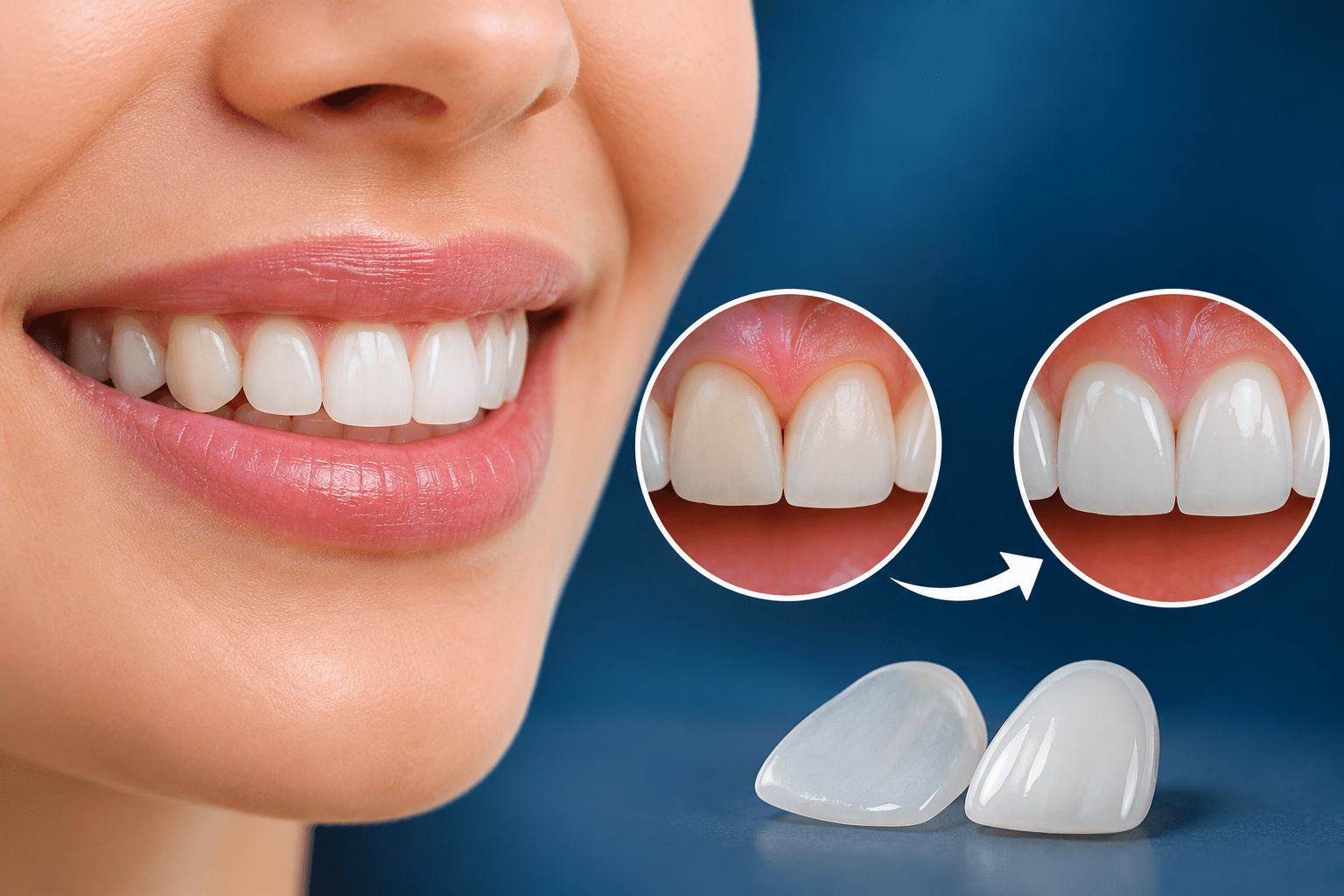
Replacing composite veneers with porcelain veneers is possible in many cases. Patients may consider this upgrade when their existing composite veneers become discolored, chipped, worn, or no longer provide the desired smile appearance. Porcelain veneers offer a durable, natural-looking alternative that can improve the overall appearance of your teeth.
The replacement process typically involves removing the existing composite material, examining the underlying teeth, and preparing them for new porcelain restorations when necessary. However, upgrading veneers does not always mean starting with completely untouched teeth. Depending on your original treatment, some natural enamel may already have been removed. Your dentist will evaluate the remaining healthy tooth structure to determine whether porcelain veneers are suitable.
If your teeth are healthy and have enough support, porcelain veneers may be a suitable replacement. An experienced cosmetic dentist can assess your teeth and recommend the best treatment option for a natural-looking smile.
Why Do People Switch from Composite to Porcelain Veneers?
There are several reasons why someone who initially selected composite veneers may eventually prefer porcelain. The decision is not always about dissatisfaction. Sometimes, patients simply want a longer-lasting solution.
1. Composite Veneers Have Become Discoloured
Composite resin can gradually absorb stains from everyday foods and drinks. Regular consumption of tea, coffee, coloured beverages, and certain foods may affect the original shade.
Although professional polishing can improve the appearance of composite veneers, it may not completely remove deeper stains.
Porcelain veneers have a smoother, more stain-resistant surface, helping them maintain their original appearance for longer with proper care.
2. Small Chips or Cracks Have Appeared
Composite material can become damaged through everyday chewing, accidental impacts, or habits such as biting fingernails.
Minor damage can often be repaired without replacing the entire veneer. However, repeated repairs may affect its appearance and shape.
Porcelain veneers are generally more resistant to everyday wear, although they can still chip or fracture if exposed to excessive force.
3. You Want a More Natural-Looking Smile
A beautiful smile should look balanced rather than artificial. Porcelain has optical properties that resemble natural tooth enamel, including its ability to reflect and transmit light.
This can create a more lifelike appearance, particularly when veneers are carefully designed to match the surrounding teeth.
4. You Want a Longer-Term Solution
Composite veneers generally need more frequent maintenance and may require repairs or replacement sooner than porcelain veneers.
Porcelain veneers can offer a longer service life when properly placed and maintained. However, their longevity depends on oral hygiene, bite forces, and regular dental check-ups.
5. Your Smile Goals Have Changed
Sometimes, people simply develop different expectations over time. You may initially have wanted a small improvement but later decide that you want a more complete smile transformation.
Porcelain veneers can provide an opportunity to reconsider the shape, size, shade, and overall appearance of your front teeth.
Also Read: Why Dental Veneers Are a Game-Changer in Cosmetic Dentistry helpful
What is the Process of Upgrading Composite Veneers to Porcelain?
Replacing composite veneers is not simply a matter of placing a new material over the old one. The dentist needs to evaluate the existing restorations and plan the treatment carefully.
Here is what you can generally expect.
Step 1: Initial Dental Examination
The first step is a detailed examination of your teeth and gums. Your dentist will check the condition of your existing composite veneers, look for signs of damage, and assess the health of the underlying teeth.
They may also evaluate your bite to identify excessive pressure that could affect the new restorations.
If there are concerns about the roots or surrounding structures, a dental X-ray may be recommended. Imaging is not necessary for every veneer replacement, but it can help investigate specific dental problems.
Step 2: Removal of Existing Composite Veneers
Once the treatment plan is finalized, the dentist carefully removes the existing composite material.
This step requires precision because the aim is to preserve as much healthy natural tooth structure as possible.
If the previous veneers involved enamel preparation, the dentist will assess the remaining enamel and determine whether the teeth can support porcelain veneers.
Step 3: Tooth Preparation
Depending on the condition of your teeth, additional preparation may be required to create enough space for the porcelain veneers.
The amount of preparation varies from patient to patient. In some situations, minimal preparation may be possible, while other cases may require more extensive adjustments.
The dentist will explain the procedure before proceeding.
Step 4: Taking Impressions or Digital Scans
After preparation, impressions or digital scans are taken to capture the exact shape and position of your teeth.
These records help the dental laboratory create porcelain veneers that fit properly and complement your facial features.
Your preferred tooth shade, shape, and smile appearance are also considered during this stage.
Step 5: Temporary Veneers, If Required
Depending on the amount of tooth preparation and the treatment plan, temporary veneers may be placed while your permanent restorations are being prepared.
These temporary restorations help protect the prepared teeth and maintain your appearance between appointments.
Step 6: Final Porcelain Veneer Placement
Once the custom porcelain veneers are ready, the dentist checks their fit, color, shape, and bite.
After making any necessary adjustments, the veneers are bonded to the teeth using dental adhesive.
The final result should look natural, feel comfortable, and fit properly with your bite.
Are Porcelain Veneers Better Than Composite Veneers?
Neither option is automatically better for everyone. Both have advantages, and the right treatment depends on what you want to achieve.
Porcelain veneers may be a better choice if you:
- Want a more stain-resistant cosmetic solution.
- Prefer a natural enamel-like appearance.
- Have existing composite veneers that need replacement.
- Want a restoration that can last longer with proper maintenance.
- Are looking for a more comprehensive smile improvement.
Composite veneers may still be suitable if you:
- Want to correct minor cosmetic imperfections.
- Prefer a generally more affordable initial treatment.
- Want a treatment that can often be completed in one visit.
- Have small chips or gaps that can be corrected with bonding.
It is also worth remembering that porcelain veneers usually involve a higher initial investment. However, comparing treatment options only by their upfront price may not give you the complete picture. Maintenance, potential repairs, and expected longevity should also be considered.
How Much Do Porcelain Veneers Cost?
The cost of porcelain veneers depends on several factors, so there is no single price that applies to every patient.
Some of the main factors affecting the treatment cost include:
- Number of veneers: Treating one tooth will generally cost less than transforming several front teeth.
- Material quality: Different porcelain materials and laboratory techniques may have different costs.
- Existing veneer condition: Removing old composite veneers and addressing underlying dental problems can affect the overall treatment.
- Tooth preparation: The complexity of the procedure varies depending on the existing tooth structure.
- Additional treatments: Gum treatment, fillings, or other procedures may be necessary before placing new veneers.
If you are researching Affordable dental veneers in Gota, Ahmedabad, remember that affordability should not mean compromising on material quality, proper planning, or dental care.
Ask your dentist for a personalized treatment plan that explains the procedure, material options, expected maintenance, and total cost before making a decision.
How Can You Make Your New Porcelain Veneers Last Longer?
After investing in new veneers, taking care of them is important. Although porcelain is durable and stain-resistant, it is not indestructible.
Follow these simple habits to protect your new smile:
- Brush twice daily using a soft-bristled toothbrush.
- Use a non-abrasive toothpaste recommended by your dentist.
- Floss regularly to keep the areas around your veneers clean.
- Avoid biting hard objects such as ice, pens, and hard packaging.
- Do not use your teeth to open bottles or tear packages.
- If you grind your teeth at night, ask your dentist about a protective night guard.
- Visit your dentist regularly for professional examinations.
- Avoid ignoring discomfort, looseness, or changes around your veneers.
Remember, porcelain veneers cover the front surface of your teeth, but they do not protect the entire tooth from decay or gum disease. Maintaining good oral hygiene remains essential.
Are You a Suitable Candidate for Porcelain Veneer Replacement?
Not everyone with composite veneers is automatically suitable for porcelain replacement. Your dentist needs to consider your overall oral health before recommending treatment.
You may be a suitable candidate if:
- Your existing composite veneers are stained, worn, or damaged.
- Your natural teeth are generally healthy.
- Your gums are in good condition.
- You have enough remaining tooth structure to support the new restorations.
- You have realistic expectations about the final appearance.
- You are willing to maintain good oral hygiene.
If you have untreated cavities, gum disease, or significant teeth grinding, these issues may need attention first.
For example, patients with noticeably crooked teeth may benefit more from braces treatment or clear aligners rather than using veneers to mask the alignment problem. Correcting the tooth position first can sometimes provide a healthier and more conservative result.
Why is Professional Smile Designing Important Before Upgrading Veneers?
Replacing old veneers is also an opportunity to rethink your smile. Instead of choosing a shade simply because it looks bright, it is important to consider how your new veneers will complement your natural appearance.
A properly planned smile design treatment considers several factors, including:
- Tooth shape and proportion.
- Natural tooth color and preferred shade.
- Gum line and smile symmetry.
- Facial features and lip position.
- Tooth alignment and bite.
- The appearance of neighbouring teeth.
At Akash Dental Care, the aim of cosmetic dental planning is to consider both appearance and oral health. A personalized approach helps ensure that the new veneers complement your smile rather than looking noticeably different from your natural teeth.
Why Choose Akash Dental Care for Dental Veneer Consultation in Gota, Ahmedabad?
Choosing the right dental clinic is essential when considering composite or porcelain veneers. At Akash Dental Care, a trusted dental clinic in Gota, Ahmedabad, patients receive personalized consultations and treatment recommendations based on their dental health and cosmetic goals.
The clinic offers cosmetic dentistry, veneers and laminates, orthodontic treatments, and smile designing to address different dental needs.
The dental team focuses on evaluating tooth structure, appearance, and overall oral health before recommending treatment. This helps patients understand the procedure, expected results, and maintenance requirements.
Whether you are considering dental veneers or laminate veneers in Gota, Ahmedabad, Akash Dental Care can help you understand suitable treatment options and plan your care.
Conclusion: Is Upgrading to Porcelain Veneers Worth It?
Upgrading composite veneers to porcelain later can be a good option if your existing restorations have become stained, damaged, or no longer meet your expectations. Porcelain veneers offer excellent aesthetics, better stain resistance, and the potential for a longer lifespan with proper care.
However, the decision should never be based on appearance alone. The health of your natural teeth, remaining enamel, bite, and long-term dental needs all matter when choosing a replacement.
If you are thinking about changing your existing veneers, speak with a qualified dentist before making a decision. A proper assessment will help you understand whether porcelain veneers are suitable and what results you can realistically expect.
Ready to Upgrade Your Smile?
At Akash Dental Care, you can explore personalised veneer options and understand which cosmetic treatment is right for your teeth. Visit the clinic in Gota, Ahmedabad, to discuss your smile goals and take the next step towards a naturally beautiful smile.
Frequently Asked Questions
1. Can composite veneers be removed and replaced with porcelain veneers?
Yes. Composite veneers can often be removed and replaced with porcelain veneers. However, the suitability depends on the remaining enamel, tooth condition, and previous preparation. Your dentist must examine your teeth before recommending replacement.
2. Will replacing composite veneers damage my natural teeth?
Carefully removing composite material does not necessarily damage healthy teeth. However, if enamel was removed during the original procedure, additional preparation may be required. Preserving the remaining natural tooth structure is an important part of treatment planning.
3. How long do porcelain veneers last after replacement?
Porcelain veneers can often last around 10–15 years or longer with proper care. Their lifespan depends on the quality of placement, oral hygiene, bite pressure, and habits such as teeth grinding.
4. Can I whiten porcelain veneers after getting them?
Porcelain veneers do not respond to traditional teeth-whitening treatments in the same way as natural teeth. Therefore, choosing the right shade before placement is important. Your dentist can help you select a colour that suits your smile.
5. Are porcelain veneers suitable for everyone?
No. Patients with untreated cavities, gum disease, insufficient enamel, or severe teeth grinding may need other treatments first. A dental examination helps determine whether porcelain veneers are appropriate.